

In today’s complex business landscape, Corporate Social Responsibility (CSR) has evolved far beyond its philanthropic roots. It is now a strategic component of how companies build trust, reputation, and long-term resilience. One of the most defining transformations in this evolution is the growing demand for inclusivity, captured through the lens of GEDSI (Gender Equality, Disability, and Social Inclusion).
GEDSI ensures that everyone—regardless of gender, ability, or background—can equally access and benefit from corporate initiatives. When embedded in CSR design, it transforms programs from mere “giving back” into strategic drivers of lasting, systemic change.
For organizations, GEDSI is no longer a moral imperative alone. It is a long-term strategic investment that strengthens organizational resilience, expands social legitimacy, and deepens stakeholder trust—the foundation of sustainable business performance.
Why GEDSI Strengthens CSR
Research consistently shows that CSR programs with inclusive design achieve better results. A 2025 study on CSR in Indonesia highlighted that weak regulations and socio-cultural barriers often limit outreach to marginalized groups (Fahlepy & Widjaja, 2025). Similarly, journals like Sustainability and Journal of Business Ethics warn that without explicit GEDSI integration, CSR risks reinforcing existing inequalities.
An inclusive approach changes that. By involving marginalized groups from the earliest stages of project design, companies create genuine community ownership and more relevant impact. At the same time, GEDSI commitments directly contribute to the Sustainable Development Goals (SDGs)—particularly SDG 5 (Gender Equality) and SDG 10 (Reduced Inequalities)—which recognize inclusion as the cornerstone of sustainable growth.
This is the strategic value of GEDSI in CSR: not just compliance, but a framework for measuring, deepening, and sustaining meaningful impact.
The Tricky Reality of Inclusion
Inclusion in CSR is rarely straightforward. Over the past decade, we’ve often faced the same challenge: overlap. Many programs already serve groups like low-income communities, rural populations, or youth. Yet within these groups, deeper vulnerabilities remain—women limited by cultural norms, people with disabilities lacking access, and minorities left out of decision-making.
This overlap can make prioritization difficult. Should a company invest in broad community benefit, or direct more resources into addressing the specific barriers faced by women and persons with disabilities within the same community?
Other challenges are equally complex. Inclusion often requires additional resources, whether for accessible infrastructure, interpreters, or community facilitators who understand local sensitivities. Social norms often create unseen barriers that discourage women and persons with disabilities from participating—even when programs appear inclusive. Many companies also lack disaggregated data to identify who’s being left out.
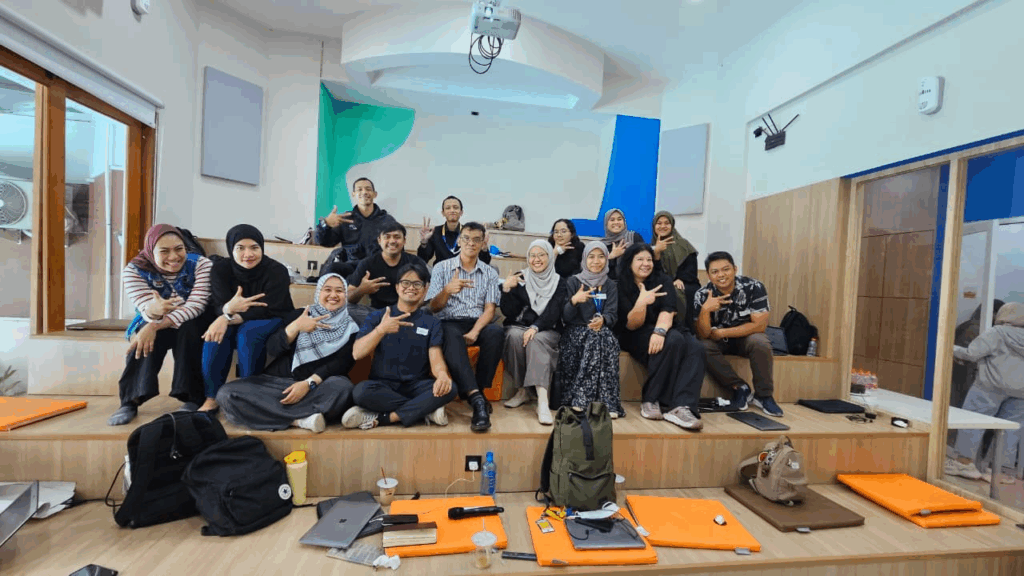
From our internal training on GEDSI Implementation on August 22nd, 2025, we were reminded of a principle we hold dearly: there is never “enough” effort when it comes to GEDSI implementation. Every step matters. Challenges and barriers should not discourage us—because even intentional, small efforts count. At the same time, our expert reminded us that good intentions alone are not sufficient, especially for the more resourceful organization. True inclusion requires deliberate design, consistent investment, and continuous monitoring.
Towards a More Practical Approach
Effective CSR programs start with a clear commitment to GEDSI—not as an afterthought, but as a core design principle. This means engaging marginalized groups early, understanding their priorities, and ensuring their participation is meaningful, not just symbolic. It also means embedding inclusion into measurement. Without gender and disability disaggregated data, it is impossible to know whether a program is actually inclusive. Companies need to track not only who benefits, but also who is missing.
Finally, inclusion needs to be sustained. CSR projects often start with enthusiasm but fade when budgets shrink or leadership changes. Building GEDSI into company policy and reporting frameworks is essential to keep the momentum beyond one hit programs.
KTM’s Commitment to GEDSI Implementation
At KTM Solutions, we believe that sustainable impact is only possible when it is inclusive. Our framework has always emphasized that corporate and community programs must not only deliver business results but also deliver impact through empowering people across gender, ability, and social backgrounds.
Over the past five years, this commitment has shaped the way we work:
- Expanding Access to Education and Mentorship
Through one of our scholarship program, we have run five consecutive batches in five years, transforming what began as in-person mentoring into coaching, mentoring, counseling to be delivered online. This shift not only increased reach but also broke barriers for students in remote and underserved areas. - Embedding Social Inclusion Quotas
Our programs intentionally create opportunities for those most often left behind. We have designed quotas for women (including women only initiatives), students from vocational schools, youth from Indonesia’s 3T (frontier, outermost, and disadvantaged) regions, and communities facing economic disparities. By making inclusion a design principle, not just a hope, we ensure diverse participation from the start. - Making Spaces Accessible
Inclusion is not only about who is invited but also about how they can participate. At some of our events, we provide sign language interpreters, choose venues that are disability friendly, and add captioning or transcripts to every learning session and even to our marketing videos. - Responsible Procurement for Inclusive Futures
For us, sustainability is not only about the outcomes of a project but also about the way we make decisions at every step. That is why we are deliberate in choosing how we procure equipment, design project items, and select our partners. At KTM, we prioritize items that are not just functional but also sustainable—using designs that extend product life, and materials that reduce waste and encourage reuse. Just as importantly, we carefully select our vendors. Competitive pricing alone is never enough. We value partners whose business practices align with ethical and sustainable principles. After all, non-sustainable processes carry hidden costs—often borne by the most vulnerable, who suffer the greatest environmental and social harm.
These efforts may differ in scale, but they are driven by the same belief. Inclusion is built step by step, choice by choice.
We also recognize that good intentions are not enough. GEDSI requires deliberate design, investment, and continuous monitoring. That is why we continue to learn, adapt, and improve how we integrate GEDSI into all our projects.
Conclusion
CSR reaches its highest potential when it transcends compliance and becomes a strategic commitment to inclusion and sustainability. Integrating GEDSI into CSR design, implementation, and measurement ensures that corporate initiatives benefit those who need them most—while strengthening legitimacy, trust, and business performance.
Building inclusion is not simple. It demands new ways of thinking, reallocation of resources, and systems that adapt over time. Yet companies that make this shift—embedding GEDSI into their structure, leadership, and culture—will shape a more inclusive, resilient, and sustainable future for both business and society.
This article was written by Maghleb Elmir, Director of Sustainability and Social Impact at KTM Solutions. She has over 13 years of experience in business development, market research, and impact-oriented business strategy. Also has 11 years of executive experience in operations, governance, and transformation. And for 8 years, he has been driving sustainability and social impact with measurable outcomes.